
Projects
Peer-led work that brings people to the table and keeps them there
Projects that shift who holds influence
A core principle of UISCE’s work is to increase the participation of people who use drugs in decisions that affect their lives.
Once issues have been identified and analysed through peer-led activities, the next step is to create the structures where peers can sustainably and independently make decisions, direct processes, and hold influence. Creating the conditions for collective decision-making is what distinguishes tokenistic peer engagement from meaningful participation.
That requires time, facilitation and independent space, where peers are not asked simply to feed back into existing systems but instead shape how the work happens and what happens next.
Peer-led work in practice
-
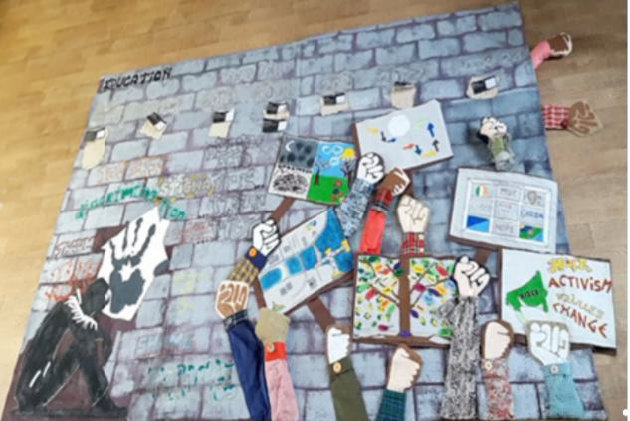
“What’s The Story?” Mural Project
An art project led by peers from Merchants Quay Ireland and UISCE, using the arts to document the years of work behind the medically supervised injecting facility and to explore the fears, hopes and expectations of every stakeholder.
Key stakeholders included representatives from the local community, business owners, An Garda Síochána, the HSE and Department of Health, and MQI. A large-scale canvas mural will be permanently installed at Merchants Quay in Dublin.
-
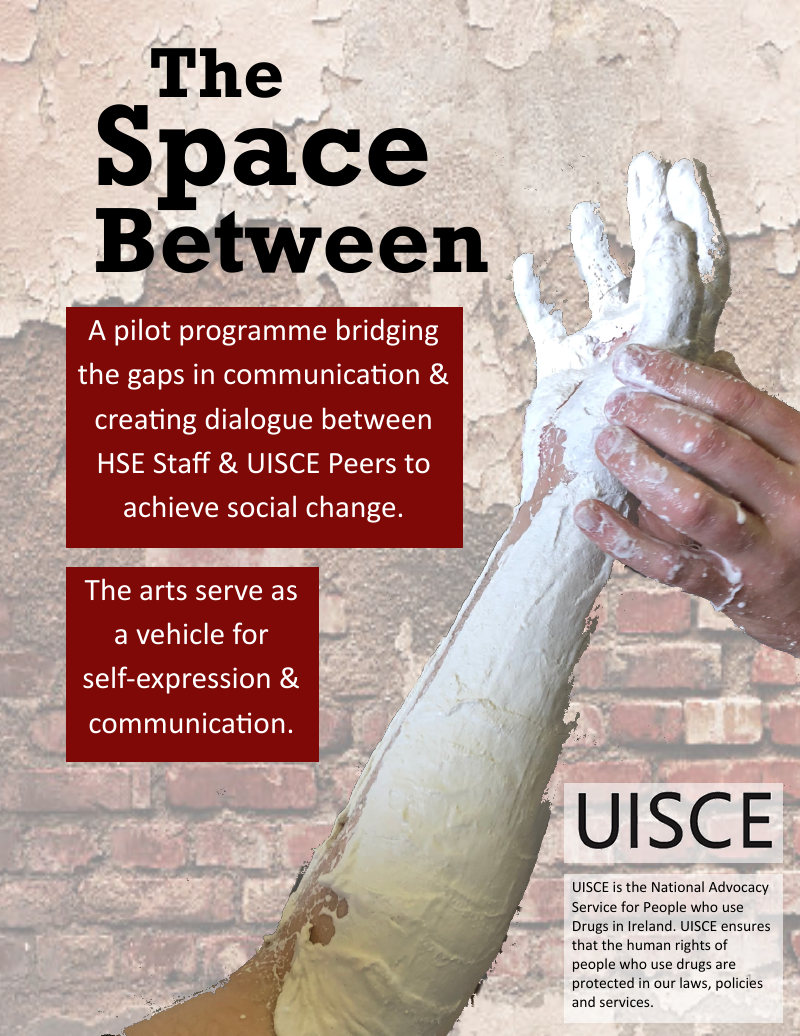
The Space Between
A pilot programme bridging the gaps in communication between HSE staff and UISCE peers. During July 2025, six General Assistants working in OAT clinics and six UISCE peers took part in a week-long programme in Dublin.
Participants unpacked stigma, unconscious bias, compassion fatigue, social determinants and the barriers affecting access to healthcare, then expressed it through the visual arts. Twelve plaster sculptures form six paired exhibits, a portable educational tool for the wider community.
-
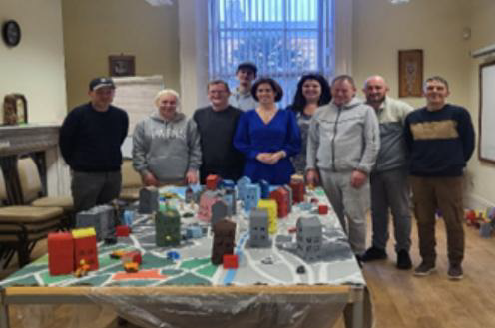
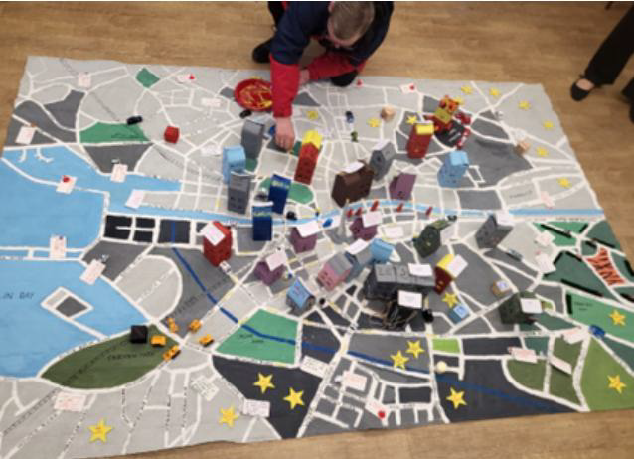
Community Mapping: “Where Do We Belong?”
A five-day peer-created project documenting the experience of exclusion and inclusion in the city, mapping the spaces relating to mental health, safety, trauma, stigma and criminalisation, and asking where people who use drugs actually belong.
A week that changed the conversation
Peers at the tables that matter
UISCE supports peers to build and strengthen peer-led decision-making structures in multiple settings. The Peer-led Naloxone Advisory Group works in partnership with the National Naloxone Quality Assurance Group on the naloxone commitments in the National Drug and Alcohol Strategy, meeting regularly with its chair and the HSE naloxone lead.
The National Drug Treatment Centre Peer-led Advisory Board has conducted in-service surveys and developed a plan between peers and management to improve care plans and complaints processes.
The MSIF Working Group, made up of people who inject drugs, secured peer representation on both the operational working group and the stakeholder group set up by MQI, ensuring peer experience influenced structures with real decision-making power.
You get to meet different people, and from the other side, some higher up than most of the people that we got to meet every day on a regular basis. So, yeah, it’s nice just to be part of a community.
John, Peer Support Worker
Bringing the message out
Support Don’t Punish
A global advocacy campaign calling for drug policies based on health and human rights, which UISCE has been part of for many years, with a peer-developed leaflet and video.
International Overdose Awareness Day
Peers out in numbers across the city on overdose awareness, harm reduction and naloxone, and presenting at Ballymun Youth Action Project’s End Overdose event.
Shining a Light on Bereavement
Supporting work with Dr Sharon Lambert and UCC on the impact of drug-related bereavement, and on grief made more complicated by stigma.
Explore our other activities
View all activitiesPartner with us
Interested in working with UISCE on a peer-led project? We would be glad to hear from you.