
Groups
Turning group work on its head, so peers set the agenda
 115 sessions in 2024
Not information delivered into people’s heads
UISCE creates the conditions for the issues raised by peers through outreach and advocacy to be explored in group settings.
People tell us most of their experience of group work is information being “delivered” into their heads to guide them on how to improve themselves or become drug free. Some of that may be useful, but in UISCE we aim to flip it, and use group work as a tool for people to use their living experience to tell services, state agencies and policymakers what they need to change.
In 2024 we ran 115 group sessions with over 200 people engaged in issue-based workshops, where people explored the issues they identified through their own living experience, developed their own analysis, examined relatable evidence and designed solutions.
Contact Us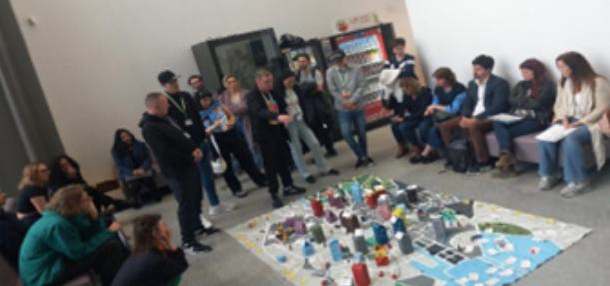
Most other places, they don’t really want you. UISCE made me feel comfortable because I came through a group and that’s how I got introduced. It was like the very first ten minutes of being sat in the room doing the thing, I just felt like I didn’t want to leave, and I’m still here.
John, Peer Support Worker
What peer-led group work produces
Community Mapping: “Where Do We Belong?”
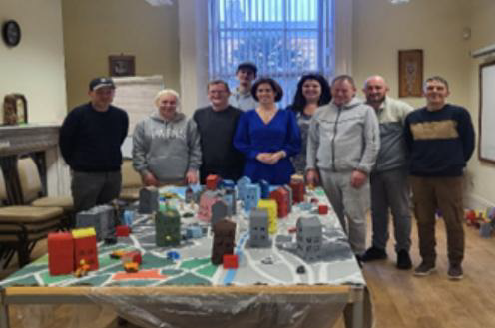
A five-day project created by peers to document their experience of exclusion and inclusion in the city, originating from peer conversations identifying a need to document safe and unsafe spaces in Dublin.
Peers used art and community mapping to map buildings and spaces relating to mental health, safety in the community, and the impacts of trauma, stigma and criminalisation. The project went on the road, with peers presenting the map to anthropologists and anthropology students from around the world at Maynooth University.
Mural Project: “What’s The Story?”
An art project led by peers from Merchants Quay Ireland and UISCE, in partnership with stakeholders from across the community and the State involved in the opening of the pilot medically supervised injecting facility.
The project used the arts to document years of work, exploring the fears, hopes and expectations of every stakeholder so we could ask how we got here and what it means for all of us going forward.
Peers setting the agenda
From personal experience to collective analysis
Decriminalisation is a central theme that comes up again and again. People’s experience is that it starts with punishment, labels people as criminal and undesirable, and attaches shame and stigma that further alienates them.
People also spoke about how not having a voice or a role in service provision and policy design disempowers them and leads to poorer outcomes for themselves, their families and the wider community.
The answer peers keep arriving at is the creation of peer-led spaces that are independent of existing services and structures, but linked in with them, so that everyone can work together to create the change we all agree needs to happen.
Mapping was very positive as it showed all of the spots around the city. It was important to show people the places we need in town, and it shows how much we need services like needle exchange and naloxone and the MSIF as safe spaces.
Paul, Peer Support Worker
Explore our other activities
View all activitiesWant to get involved?
Our groups come from the issues peers bring to us. There is a place for you in that.